
Meaning and heritage
The Meaning and Cultural Significance of Rituals
SIU YAN — Digital Rituals & Fortune Services
Rituals are intentional, symbolic practices deeply rooted in human culture. They provide a way to express intentions, connect with tradition, navigate life transitions and give meaning to personal experiences.
In Hong Kong and the wider Chinese cultural sphere, rituals have a particularly rich historical and cultural significance. They are shaped by centuries of Chinese philosophy, folk religion, Taoist and Buddhist traditions, ancestral veneration and local customs.
01
Hong Kong’s Chinese Ritual Heritage
Hong Kong preserves a distinctive blend of traditional Chinese spiritual practices and contemporary urban culture.
Ancestor veneration
Honouring family ancestors and maintaining a symbolic connection between generations.
Taoist traditions
Rituals involving prayers, offerings, incense and symbolic practices associated with harmony and balance.
Buddhist traditions
Practices emphasizing compassion, mindfulness, spiritual reflection and the impermanence of life.
Chinese folk beliefs
Traditional customs associated with prosperity, protection, good fortune and auspicious occasions.
Feng Shui
The traditional Chinese practice of considering how spatial arrangements and environmental relationships influence harmony and well-being.
Chinese New Year traditions
Rituals welcoming prosperity, renewal, good fortune and new beginnings.
These traditions remain visible in Hong Kong’s temples, festivals, family customs and everyday cultural life.
02
The villain-hitting rite
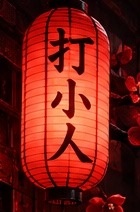
SIU YAN takes its name from 打小人 — in Cantonese daa2 siu2 jan4, often written da siu yan — a living folk rite of Hong Kong and the Pearl River Delta. This section gathers what is commonly known about that custom.
Jingzhe
Observed all year, and most visibly at Jingzhe, the third solar term — around 5 or 6 March — when spring thunder is said to wake what has been lying still.
Goose Neck Bridge
The best-known gathering place is under the Canal Road Flyover, known as Ngo Keng Kiu (鵝頸橋), between Causeway Bay and Wan Chai.
Paper, shoe, flame
A paper figure is struck, often with a worn slipper against a brick. Offerings are later given to fire.
Villains and noble people
In folk language the aim is to drive away siu yan (小人), petty harm and obstruction, and to welcome gwai yan (貴人), helpful people.
What “hitting the villain” means
打小人 is a folk rite of the Pearl River Delta, kept especially vividly in Hong Kong. Siu yan does not mean a child. It names the gossip, spite and obstruction that wear a person down, and by extension a run of ill feeling or misfortune.
Here the name means what you wish to release, never a person you wish to harm.
The documentary origin is hard to pin down. Local historians often trace the custom to Guangdong agricultural practice: at Jingzhe, communities made offerings to the White Tiger, a fierce folkloric presence thought to stir as insects and beasts awoke. Over time, “hitting the petty person” grew beside that offering and took on its own urban life. Some accounts place related customs in places such as Dongguan and Zengcheng before 1949, though early written records are scarce.
When the rite is observed
Jingzhe (驚蟄), “Awakening of Insects,” is the third of the twenty-four solar terms, usually falling on 5 or 6 March. Folklore holds that the year’s first spring thunder startles hidden creatures into motion — and that petty troubles stir with them. The day is also spoken of as a moment when the White Tiger opens its mouth.
The rite itself has no closed season. It may be performed on any day. In Hong Kong it is most crowded at Jingzhe; some people also favour certain lunar dates, such as the 6th, 16th and 26th.
Where it lives in Hong Kong
The most famous site is under Goose Neck Bridge — the Canal Road Flyover at Canal Road West and Hennessy Road, between Causeway Bay and Wan Chai. The shaded fork beneath the road has long been regarded as a potent setting for this kind of work.
Other neighbourhood places have included the Guanyin temple in Hung Hom and the banyan-tree gathering spot in Yau Ma Tei. Hong Kong has recorded the practice among the city’s intangible cultural heritage. In 2009, TIME included it in a Best of Asia list as a way to get things off one’s chest.
How the folk rite unfolds
Specialists differ, and no single script is official. A widely described sequence has about eight movements.
- 01
Invite
Incense and candles are offered. Figures of Guanyin and the Monkey King are often present.
- 02
State the matter
The client’s name may be written on a charm. The paper figure may stand for trouble in general; in traditional stall practice it is sometimes named.
- 03
Strike
The paper is placed on a brick and struck with a shoe, usually a worn slipper, while verses are recited.
- 04
Offer to the White Tiger
Especially at Jingzhe, pork fat or a trace of pig’s blood is smeared on a paper tiger’s mouth — a gesture of feeding the beast so it will not wound.
- 05
Disperse
Rice, beans or sesame may be scattered, a sign of sending trouble away.
- 06
Welcome noble people
Red paper for gwai yan is used after harm is driven off, calling helpful presence.
- 07
Transform through fire
The paper figure, the tiger and joss paper are burned.
- 08
Cast the moon blocks
Two crescent wooden blocks are thrown. One yin and one yang — the “sacred cup” — is read as completion.
This is a description of a living culture, not a guide for harming anyone. SIU YAN does not enact these stall steps, and it never asks you to name another person.
03
The Four Dimensions of Rituals
Rituals have several well-documented psychological and social functions.
Symbolic significance
Rituals communicate values, beliefs and cultural identity through meaningful actions, objects and symbols.
Psychological significance
Research suggests that ritualistic practices can help regulate emotions, reduce uncertainty and restore a sense of control.
Social significance
Shared rituals strengthen community bonds, collective identity and relationships between generations.
Life transitions
Rituals mark important milestones, including birth, adulthood, marriage, loss, remembrance and new beginnings.
04
Scientific Research
Research provides evidence for several psychological and social functions of ritual practices.
Norton & Gino (2014)
Rituals Alleviate Grieving for Loved Ones, Lovers, and Lotteries
Experimental research found that performing rituals can reduce grief following different types of loss. One proposed mechanism is the restoration of perceived control.
Harvey Whitehouse (2023)
Rethinking Ritual: How Rituals Made Our World and How They Could Save It
Anthropological research examines the role of rituals in social cohesion, cooperation and shared cultural meaning.
OpenStax
Introduction to Anthropology
Explains how rituals contribute to social identity, community belonging and the marking of important life transitions.
05
The SIU YAN Philosophy
SIU YAN — Digital Rituals & Fortune Services draws inspiration from the rich heritage of Hong Kong and traditional Chinese cultural practices.
The service approaches rituals as personal and symbolic experiences that combine cultural inspiration with contemporary digital interaction.
Each ritual can incorporate four essential elements:
Setting an intention
Identifying a personal wish, aspiration or purpose.
Symbolic meaning
Connecting the intention with traditional Chinese symbolism and cultural heritage.
Conscious participation
Taking part in a deliberate and meaningful experience.
Completion and remembrance
Creating a symbolic conclusion and a lasting digital memory.
What SIU YAN carries forward
A private intention. Symbols that stand for it. A making, then a burning. The feeling of setting something down.
We will not name or target a real person, store your written words, or promise luck, injury to others, or any supernatural result.
Your wish becomes symbols on this page alone. Those marks may be inscribed when the ritual NFT is minted, then burned with it.
06
Cultural Integrity and Scientific Transparency
SIU YAN recognizes the cultural and historical importance of Chinese ritual traditions while maintaining a clear distinction between cultural beliefs and scientifically established findings.
There is research supporting the psychological and social functions of rituals. However, supernatural effects, guaranteed fortune, future prediction and the ability of rituals to directly change external events have not been scientifically established.
The service therefore presents rituals as meaningful cultural and personal experiences, rather than scientifically proven supernatural interventions.